SHARE-MEDWATER at the 4th ISE Innovation Camp
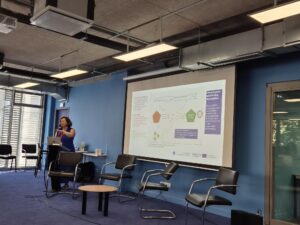
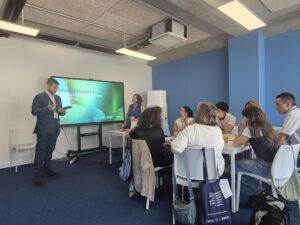
The 4th Innovation Camp, hosted by the Interreg Euro-MED Innovative Sustainable Economy (ISE) Mission in Marseille on 16–17 September 2026, focused on turning “sufficiency” into concrete action across Mediterranean territories. Rather than relying solely on technological efficiency, the event explored how a sufficiency-based economy can address urgent environmental challenges by rethinking production models, consumption habits, governance structures, and resource management within planetary limits.
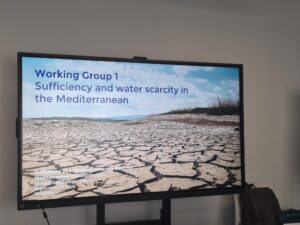
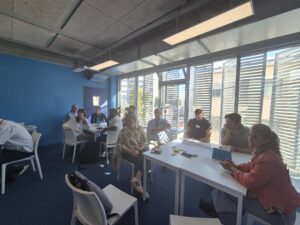
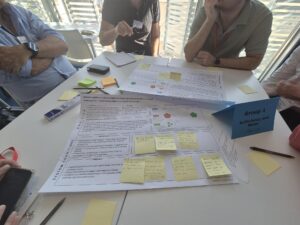
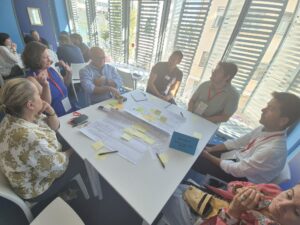
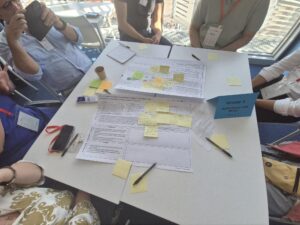
Representing the SHARE-MEDWATER project, our team actively participated in Working Group 1: Sufficiency and Water, engaging directly in the Transformative Innovation Policy Labs (TIPLabs) dedicated to water scarcity. Together with regional authorities, researchers, and project partners, we examined how local governments can integrate water reuse, non-conventional water resources (NCWR), and behavioral shifts into regional policy frameworks to build long-term water resilience.
Rethinking Water Efficiency and Sufficiency
While water efficiency—reducing leaks and optimizing technical delivery—remains an essential baseline, efficiency gains alone cannot resolve systemic water stress if total demand continues to grow. Sufficiency expands this approach by actively reducing overall demand, encouraging equitable water use, and integrating circular water loops into daily management.
During the TIPLab discussions, our focus centered on elevating Non-Conventional Water Resources (NCWR), such as rainwater harvesting, greywater recycling, and treated wastewater. Historically treated as emergency fallback options, these non-conventional resources must become a mainstream component of territorial water supply under a sufficiency framework. By linking decentralized community pilots with district-scale distribution networks, local territories can systematically reduce reliance on overexploited natural aquifers.
Addressing Governance Bottlenecks and Behavioral Change
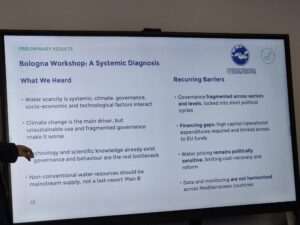
A key conclusion from the TIPLabs was that technological solutions and scientific methodologies for water management already exist. The primary barriers to adoption lie in administrative fragmentation, short-term political cycles, and ingrained public habits.
Achieving meaningful water sufficiency requires synchronized efforts across both demand and supply:
- On the Demand Side: Cultivating cultural shifts toward moderate, conscious water consumption among households, agriculture, and local industries.
- On the Supply Side: Empowering local and regional authorities to dismantle policy silos, align local governance with overarching strategies like the European Water Resilience Strategy, and implement long-term planning tools.
Translating Policy Insights into Action
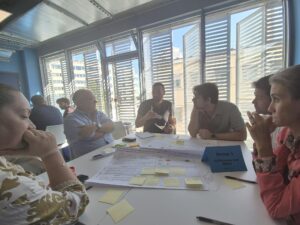
The TIPLabs provided an actionable framework for translating high-level policy objectives into practical instruments for local authorities. Through mapping exercises and collaborative working groups, participants identified concrete pathways to remove regulatory blockages, align funding mechanisms, and accelerate the uptake of sustainable water management models across the Mediterranean.
The outcomes of the 4th Innovation Camp strongly align with the core objectives of SHARE-MEDWATER. By testing decentralized water reuse solutions, utilizing Decision Support System (DSS) tools, and fostering participatory governance, SHARE-MEDWATER continues to support local authorities in driving a lasting transition toward Mediterranean water resilience.