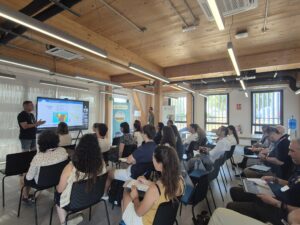
The SHARE-Med WATER project successfully launched its first Cross-Border Capacity-Building Programme in Amposta, Spain, bringing together project partners, experts, and local stakeholders for two days of knowledge exchange, technical discussions, and field-based learning focused on sustainable water reuse solutions in the Mediterranean.
Hosted by IUCN and EURECAT at the Climate Resilience Centre in Amposta, the event centered on the project’s first pilot case study: the Ebro Delta Pilot, an innovative initiative designed to address water challenges through circular water management approaches and nature-based solutions.
Day 1: Understanding the Ebro Delta Pilot and Building Collaboration
The programme opened with welcoming remarks and an overview of the SHARE-Med WATER project, setting the stage for discussions on the importance of water reuse and community-based water management in Mediterranean regions. Representatives from CUEIM presented the key conditions and constraints currently affecting water communities, highlighting the need for innovative and collaborative solutions to address increasing pressures on water resources.
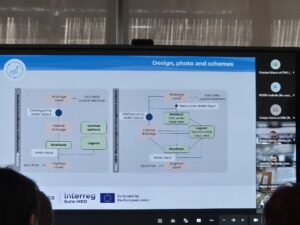
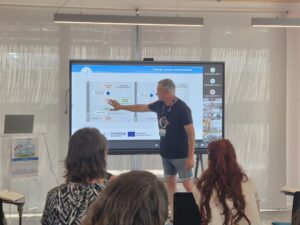
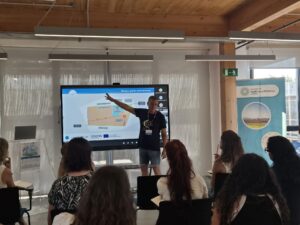
A central focus of the morning was a comprehensive presentation by EURECAT on the Ebro Delta Pilot. Participants explored the area’s water situation, the pressures affecting local water resources, lessons learned from previous interventions, and the pilot’s technical design. Discussions also addressed permitting requirements and policy alignment, emphasizing the importance of integrating innovative solutions within existing regulatory frameworks.
The session highlighted how nature-based solutions (NbS) can contribute to hydrological management while supporting environmental resilience and long-term sustainability in one of the Mediterranean’s most ecologically significant wetland regions.
The morning concluded with a moderated dialogue involving project partners and local stakeholders. The discussion focused on barriers and opportunities for water reuse, governance considerations, and strategies to ensure that proposed interventions align with local priorities and community needs. The exchange provided valuable insights that will support the co-design and future implementation of the pilot.
Day 2: From Plans to Reality at the Ebro Delta
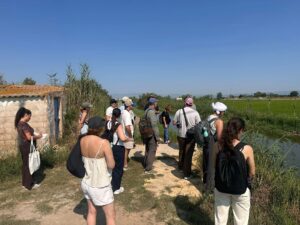
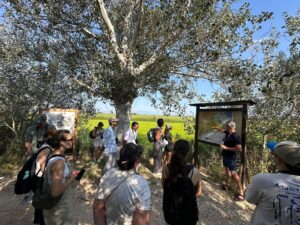
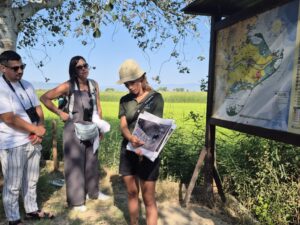
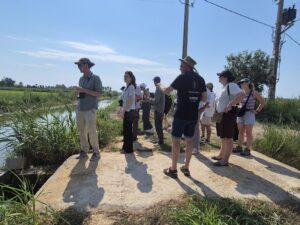
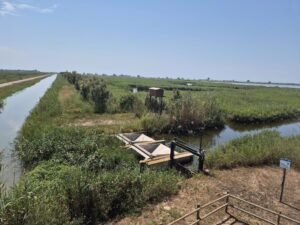
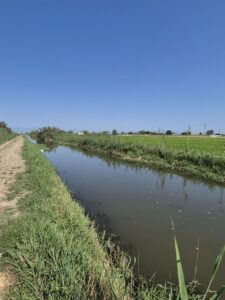
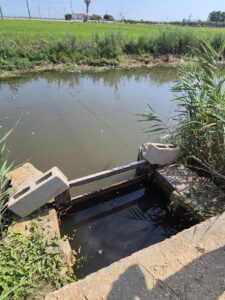
The second day was dedicated to a field visit to the Ebro Delta pilot site, giving participants a unique opportunity to connect project concepts with the realities of the local landscape. Hosted by EURECAT, the visit included technical demonstrations, operational walkthroughs, and practical discussions on the future implementation of the pilot. [
Participants walked through the proposed intervention areas, visualizing where future infrastructure, including pumping systems, natural treatment wetlands, and lagoon-based water treatment components, will be integrated into the existing agricultural and drainage network of the Delta.
EURECAT experts provided detailed explanations of the technologies planned for deployment and discussed how these systems will contribute to improved water quality, water reuse, and ecosystem resilience. The site visit also created valuable opportunities for on-site questions and technical discussions, allowing participants to assess real-world challenges and ensure that engineering solutions are well adapted to local environmental conditions.
Strengthening Mediterranean Cooperation for Water Resilience
The first Cross-Border Capacity-Building Programme demonstrated the value of bringing together researchers, technical experts, policymakers, project partners, and local stakeholders to jointly develop practical solutions for sustainable water management.
By combining technical expertise, stakeholder engagement, and field-based learning, the event strengthened collaboration across the Mediterranean and advanced the shared goal of creating resilient, community-centered water reuse systems. As the Ebro Delta Pilot moves closer to implementation, the knowledge and partnerships developed during these two days will play a key role in supporting innovative water solutions that can be replicated and scaled across the region.
The SHARE-Med WATER project continues to foster cooperation and knowledge exchange across Mediterranean territories, promoting sustainable and circular approaches to water management for communities facing increasing water scarcity and climate-related pressures.